Twitter is reportedly stepping up its fight against fake accounts by suspending more than 1 million accounts a day in recent months.
That's more than twice the number of account suspensions in October, when the social media company was under pressure from lawmakers to fight Russian meddling, The Washington Post reported Friday. Data obtained by the Post shows more than 70 million Twitter accounts were suspended in May and June, and the company has continued to crack down at that rate into July.
In response to a request for comment, Twitter directed CNET to a blog post from last week that says, in part, that Twitter is "now removing 214 percent more accounts for violating our spam policies on a year-on-year basis." The company also said the average number of spam reports it's received dropped from around 25,000 a day in March to around 17,000 a day in May. New protections "have already helped us prevent more than 50,000 spammy sign-ups per day," the post reads.
Removing accounts at this scale could lead to a drop in the number of monthly active users in the second quarter, a person familiar with the matter told the Post. A Twitter representative told CNET that the company's Q1 shareholder letter acknowledges that its "ongoing information quality efforts," along with other factors, were impacting the number of monthly active users (MAU).
"MAU may continue to be negatively impacted in future periods due to our ongoing information quality efforts, GDPR, and other operational decisions," the letter reads.
Twitter's effort to combat abusive bots and trolls comes as the company deals with revelations that Russian-linked social media troll accounts might have impacted the outcome of the 2016 US presidential election. Russian bots shared Donald Trump's tweets almost 470,000 times between Sept. 1 and Nov. 15, 2016, and retweeted candidate Hillary Clinton less than 50,000 times, Twitter told congressional investigators in January.
The Sony A7 III may be the worst nightmare Canon and Nikon have faced in years: a full-fat, full-frame camera for just $2,000. This could cut into their bread and butter -- professional/prosumer cameras -- at a time when smartphones have already devastated the traditional consumer point-and-shoot.
But apparently Canon and Nikon are just about ready to fight fire with fire by announcing their own full-frame mirrorless cameras.
Nikon Rumors reported this week that Nikon will announce not one, but two full-frame mirrorless cameras by the end of this month, shipping in August, with a 25-megapixel model rumored to cost under $3,000 complete with a lens. (A separate 45-megapixel model may cost around $4,000 with lens.)
They'll reportedly have a relatively compact form factor (like the Sony A7) and 5-axis stabilization (ditto), plus a new mirrorless lens mount.
Nikon had previously said it would bring a high-end mirrorless camera to market by spring 2019.
Not to be outdone, Canon Rumors reported Thursday that Canon will also have two full-frame mirrorless cameras coming "before the middle of 2019," including a 30.4-megapixel model and perhaps a 24-megapixel model, each of which shoots 4K video.
As a Canon DSLR fan, I'm just hoping a new Canon camera might be compatible with my existing lenses. "One trusted source told us that the full frame mirrorless camera and EF mount problem has a "sexy" solution," writes Canon Rumors, but it's not clear what that means yet.
Nikon declined to comment. Canon didn't immediately reply to a request for comment.
Aside from a looming 'Ultra' tier that could raise prices while restricting features like 4K, HDR or simultaneous streams, Netflix has recently notified users of one feature that's definitely going away: written user reviews. While Netflix dropped the five-star rating system from its apps early last year, on the website users can still write down and share their thoughts.
In an email notifying users who had recently left a review, Netflix blamed the change on declining usage, which at least one user turned that back around on the company for removing bylines and star ratings. Despite their limited appearance on the service, even recently-debuted shows feature hundreds of comment entries. According to CNET, while Netflix plans to stop accepting reviews as of July 30th, they will be readable until mid-August.
If you're wondering why Netflix might make the change, a quick perusal of the reviews suggests some possible answers. As it spends billions of dollars on original content, the company may not want to enable a public forum for it to be disparaged, or give space for people to comment on third-party content that has been removed. Also, for a company that famously does not provide numbers regarding the popularity of content or participate in tracking by outsiders, the feature stood out curiously as a public representation of subscriber's responses.
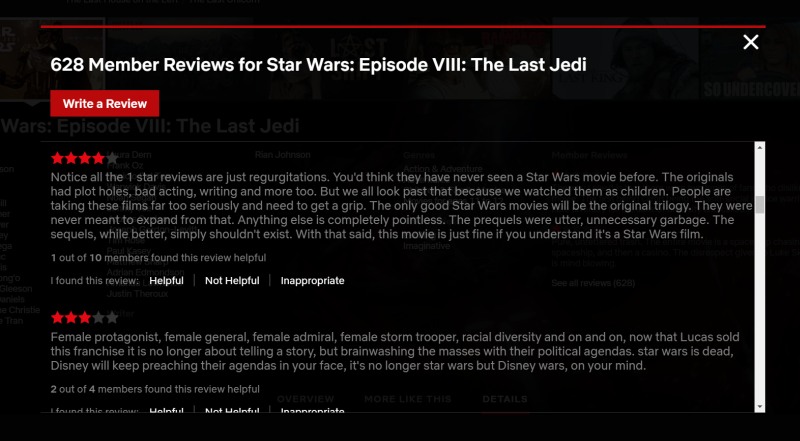
Netflix user reviews for 'The Last Jedi'The use of "review bombing" by trolls in search of new battlefields for their cultural warfare is also a problem That's what happened to comedian Amy Schumer's Netflix special last year -- just before the company switched from stars to a simpler thumb up/down system -- while recent releases like The Last Jedi show similarly suspicious trends. For a feature that doesn't play into its continually evolving recommendations and automatically sorted categories, investing in the kind of community management or moderation required to deal with internet trolls might not make sense.
None of the tools we've recommended for augmenting your Netflix use include spaces for written reviews, although a site like InstantWatcher will include any awards a piece of content has received and put IMDB one click away. If you'd like to see your own reviews before they go away for good, then click right here, it's just as simple as pulling up your viewing history.
With India becoming a mobile-first country, smartphones will decide nearly 8 in 10 four-wheeler purchases and approximately 7 in 10 two-wheeler sales by 2022, a new Facebook-KPMG report said on Thursday.
Approximately one in two four-wheeler purchases (47 per cent) and two-wheeler purchases (45 per cent) will be influenced by Facebook, said the latest "Zero Friction Future" report.
The findings showed that media friction causes one-third of the total friction loss in four-wheeler purchase and almost half of the friction loss in two-wheeler sales.
"We aim to help automotive brands reduce friction in the consumer journey and suggest relevant mobile marketing strategies to offer seamless purchase experiences to help them win consumers and increase sales," said Sandeep Bhushan, Director, Facebook India and South Asia.
The Indian automobile market is expected to sell 5.6 million and 30.9 million four-wheeler and two-wheeler units, respectively, by 2022.
Optimising mobile in auto marketing media mix can help create a potential sales opportunity of over 3.6 million vehicles between brands by 2022, the report noted.
Launched in May, the "Zero Friction Future" programme aims to define, understand and mitigate friction in consumer purchase journeys to unlock business growth with mobile use.
Titled "Eliminating friction in automobile path to purchase," the new report on auto industry highlighted the role mobile can play to influence consumer purchase while buying a four-wheeler or a two-wheeler.
"The reports aims at assisting automobile original equipment manufacturers (OEMs) and marketers in designing mobile or digital driven marketing strategies which could help them in winning a greater share of automobile buyers, at an improved RoI on marketing spend," informed Mritunjay Kapur, Partner and Head-Technology, Media and Telecom, KPMG in India.
In the four-wheeler category, the report said, increased role of mobile in media mix can help increase 1.2 percentage points of purchase conversion contributing to approximately 1 million units of potential market by 2022 — at a 14.7 lower customer acquisition cost.
"Similarly, in the two-wheeler category, it can help increase 1.6 percentage points of purchase conversion, adding to 2.6 million units of potential market by 2022 — at 7.8 per cent lower customer acquisition cost," the report said.
The report is based on primary research and insights survey conducted by Nielsen.
"This study will give a strategic view on the opportunities being missed by marketers due to media friction and bring in further optimzation," said Ashish Karnad, Executive Director-Marketing Effectiveness, Nielsen India.
Reliance Jio has announced a bunch of products including JioPhone 2, GigaRouter, GigaTv set-up box and . The company has also announced that YouTube, Facebook and WhatsApp are coming to the JioPhone. The next version of the JioPhone will go on sale from 15 August at a price tag of Rs 2,999.
The Jio Phone 2
The latest JioPhone 2 is priced at Rs 2,999 and comes with 2.4 QVGA display with larger QWERTY keyboard and bigger screen as compared to the previous JioPhone.
Specifications of the Jio Phone 2
The device comes with 512 MB RAM, 4 GB of internal storage which can be expanded up to 128 GB using microSD card and a 2,000 mAh battery. It supports VoLTE, voWiFi, dual-SIM, FM, BT, Wi-Fi, GPS and NFC. The device runs on KAI OS, comes with a mono speaker, 2 MP rear and front VGA camera.
The device supports dual SIM slots allowing for two nano-SIM cards.
Also announced at the Reliance Industries AGM was the Jio Monsoon Hungama offer. The Monsoon Hungama offer allows existing JioPhone users to exchange their current device for a new JioPhone at just Rs 501.
It has been nearly one full year since Chinese smartphone maker OnePlus launched the flagship. Being a long time OnePlus fan and ardent follower of OnePlus' great hardware at a good price philosophy, made me gravitate towards the phone. I'll be quite honest. I laid my hands on the device after nearly two months of its launch and my experience with the device has been nothing short of exemplary. At a price tag of Rs 32,000, the phone was everything I could dream of and more. The hardware was powerful, the software was seamless, the display was amazing and the camera (in my opinion) was the best in its price range.
The OnePlus 5 (R) and OnePlus 6 (L)
I admit I did feel slightly annoyed when the launched just 3 months after I bought the OnePlus 5, but when I used the device I found out that I was not missing out that much. Admittedly, the 5T had a slightly bigger screen and a slightly better secondary camera, but that was about it. In the months that followed, predictably the OnePlus hype became somewhat dim and credit has to go to Samsung, Vivo and Huawei for making all the noise.
But OnePlus is OnePlus. It knows how to steal the thunder. Everyone knew the next-gen OnePlus was coming. Rumours on the net, controlled leaks, exclusive interviews, and a strong social media campaign became the concoction that sold the to the audience even before it was launched.
Image: Kshitij Pujari/tech2
Over the month of May, the only slogan you could hear everywhere was "The Speed You Need". The Speed. OnePlus 6 smashed records after it went on sale in mid-May 2018 and it's USP? The mind-blowing performance for the price it was being offered at. People were raving about how it was one of the greatest flagship smartphones ever. It was hard to argue with the fact. OnePlus 6 combined some insane specs and bundled it in a price that was significantly below its competition. Notch or no-notch, OnePlus 6 became the new poster child for OnePlus and instantly was one of the most desirable devices.
OnePlus 6 Silky White Image: Kshitij Pujari/tech2
As a fan of OnePlus, it was but obvious that I wanted to get my hands on the device. Working as a reviewer, the chance of using the phone completely for my own came in the form of the newly launched Silky White colour variant of the OnePlus 6. It would seem that my wildest dreams had come true.
I was getting to use the most talked about Android smartphone as my daily driver. But there was another angle. As a longtime user of the OnePlus 5, it was an opportunity to take a hard look if I really wanted to move on from it. It was, as I had said earlier on an amazing device. I believed that the OnePlus 6 was enough to convince me to leave the OnePlus 5. But did it?
Performance
Let me be quite clear. Both the devices are exceptionally fast. In my 10 months of using the OnePlus 5, I hardly remember a time when the device hung up or or slowed down and I have put it through the grind. More than what an average smartphone user would anyway. I have no complaints about either phone's performance.
My OnePlus 5 packs in a cool 8 GB of RAM and 128 GB of storage and is powered by a Snapdragon 835 chipset. Games like Asphalt, PUBG, Modern Combat were buttery smooth even on the highest graphics settings, while heavy apps like Facebook and Snapchat ran without a hitch. Oxygen OS was as close to stock Android as you can get. Now I know that OnePlus was caught with the OnePlus 5. The jury is still out on that. But in my time with the OnePlus 5, I never once felt the need to upgrade to another device because the OnePlus 5 itself was a great device.
The OnePlus 6 admittedly is no different. Two weeks isn't as long as 10 months but I can say that the OnePlus 6 isn't as fast as I had hoped it would be. Sure it's a tad bit faster than the OnePlus 5 and that is because of the new Snapdragon 845 chipset. But it doesn't give that mind-boggling speed that would make me ditch my OnePlus 5.
To that end, as far as benchmarks are considered, the OnePlus 6 wipes the floor with the OnePlus 5 and other competitors such a the or the. In real life, however, there seems to be a negligible difference in performance as compared to the OnePlus 5. In connection to the battery, I saw that the OnePlus 5 had more juice than the OnePlus 6, but that could have been due to the bigger screen on the latter.
Notch and Display
Yeah, it's there on the OnePlus 6 and obviously, this isn't news. Chinese smartphone makers have become quite adept at aping the at every turn. That doesn't mean we have to like it. I certainly don't. It's annoying and it eats into any video I'm watching on full-screen. However, OnePlus' software optimizations do provide you the option of removing the notch. My question is why include one in the first place if you needed to put a software bezel to hide it? Apart from that, the OnePlus 6 has the same AMOLED display like the OnePlus 5, albeit a bit taller.
In retrospect, the OnePlus 6 display isn't even tall enough to make much of a viewing difference for me. Remember that feeling when you start using a big screen phone and suddenly when you look at a smaller screen phone you feel that the text on the latter is much smaller than you remember? I didn't get that when I switched back from the OnePlus 6 to the OnePlus 5.
Removing the notched area, the OnePlus 6 screen measures 6.1-inches diagonally which is bigger than the 5.5-inch of the OnePlus 5 but not enough to make a significant difference in my opinion.
However, while I'm browsing through the phone there's something disconcerting about a tall display. I have to stretch my thumb painstakingly high to drag the notification tray down on my OnePlus 6. On the OnePlus 5, the movement is quite easy as the display is just the right size for my hand. It is these small things in a phone that can make or break it. I'm not saying that the OnePlus 6 display is too big. I'm just saying that in my opinion, the OnePlus 5 display is more user-friendly than the OnePlus 6.
Camera
OnePlus 5 was marketed as a revolutionary camera phone. In our review, we found out that the phone had a decent camera which performs poorly in low light. While the latter half is true, calling the OnePlus 5 camera now as only decent is quite undermining. I will admit that when it was earlier launched, the OnePlus 5 did not have the best of cameras in its price segment. However, after months of updates, I can say that the OnePlus 5 now takes amazing photos. It is still nowhere in the league of the Pixel 2 or the iPhone X or the Galaxy S9 Plus, but these smartphones cost nearly 20,000 to 30,000 more than the OnePlus 5.
The OnePlus 6, in my humble opinion, hasn't been able to impose itself over the OnePlus 5 in terms of photography. I mean sure the OnePlus 6 has 480 fps video recording capability and OIS in one of its sensors. But this will only be useful to people who shoot a lot of video with their smartphones.
I'm not one of those people. I come in the standard category of users that favour photos over videos. In that respect, the pictures snapped by both the OnePlus 5 and OnePlus 6 are nearly the same. Slightly better low light photos can be expected from the OnePlus 6 but that is because it has wider aperture on the secondary sensor. Front facing cameras on both devices are identical.
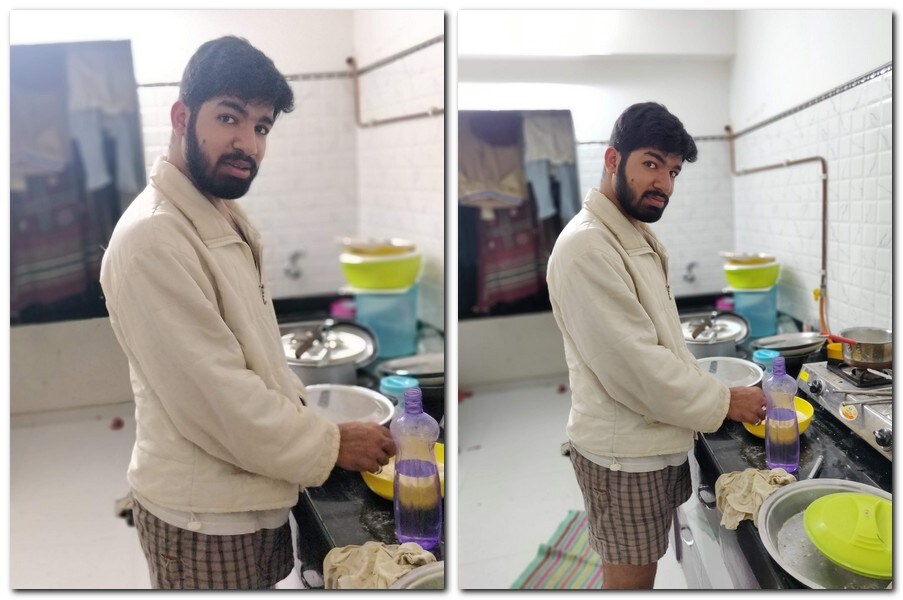
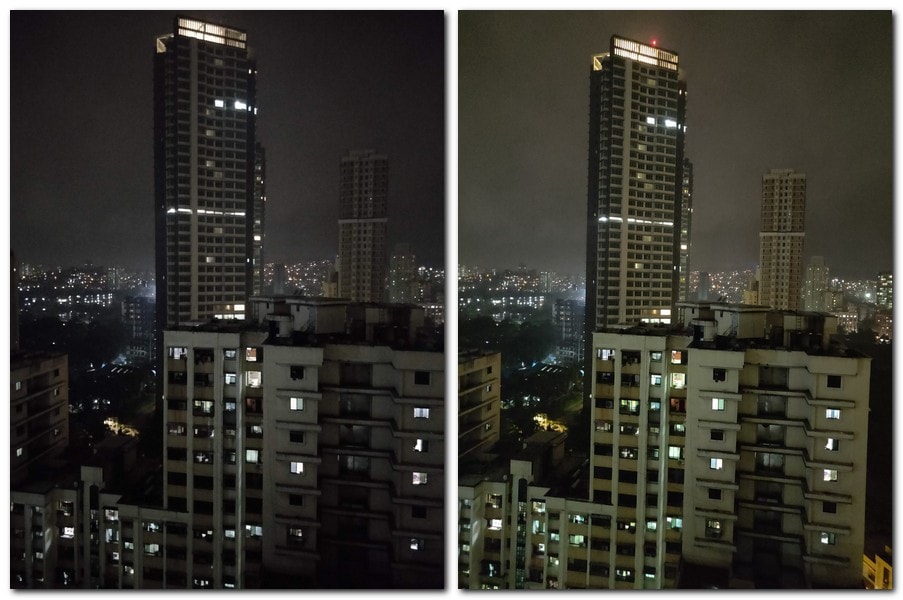
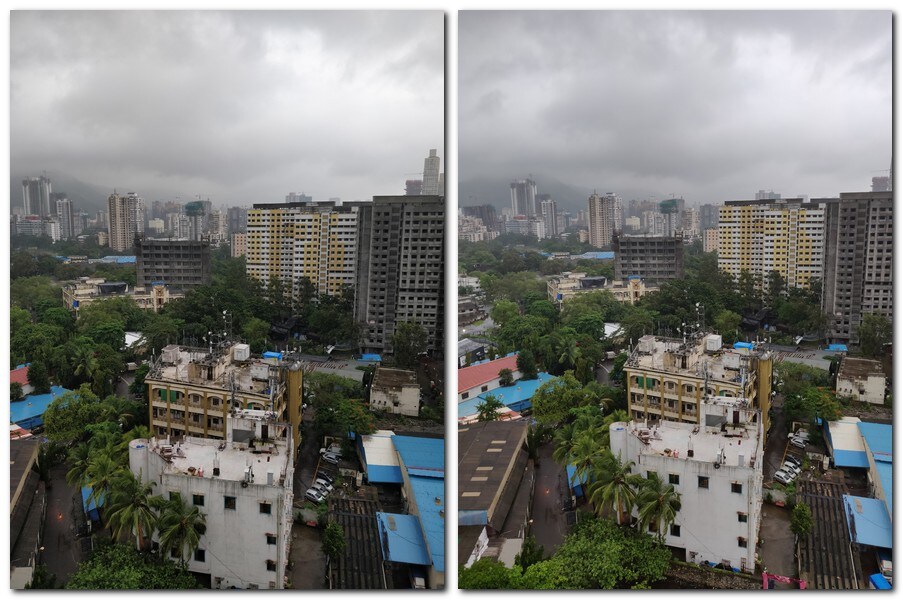
A blind photo test between the two devices should make it more clear. Below are a set of same images that have been taken from the OnePlus 5 and OnePlus 6. Let's see if you can spot which phone took which.
Hard to make a judgment? The left side images are OnePlus 5 and the right side is OnePlus 6. I'll leave it for you to decide which one is better. If you would like to see the high-res images of both these smartphones, you can check out the Flickr link below.
Design
The OnePlus 5 had a metal back. This gave the phone more resilience, sturdiness and made it less slippery. The OnePlus 6 with its glass back is not only less resilient (glass is fragile and metal is not) but the phone is quite slippery indeed. Matter of fact if I hadn't put a case on it, I'm quite sure that I would have cracked the glass on the back. Also, the OnePlus 6 is also significantly heavier than my OnePlus 5 which is slightly offputting for me.
Then there is the fingerprint reader. I know many people prefer it on the back and many prefer on the front. I'm in the latter category, but knowing how big tall screens are now a norm, quite clearly fingerprint reader won't stay on the front. But it doesn't matter on the OnePlus as its face recognition software is so good and accurate (even if it's not secure) because I hardly use the fingerprint reader anyway. But in cases that the face authentication software fails and the phone is lying on my workbench, I would prefer if the fingerprint scanner is on the front instead of behind.
Verdict
Don't get me wrong. I love the OnePlus 6. But then again I love nearly everything OnePlus does (not the OnePlus 2). As a user of the OnePlus 5, I feel that the device is a compact, sleek and a powerhouse of a device. It is efficient in performance and even after 10 months of usage and it still gives me at least a day's battery.
The OnePlus 6 also happens to be a truly amazing device. The bigger display, camera tweaks and a glass back make it an extremely enticing option for buyers. But does the phone offer such an immense upgrade that I part from the already amazing OnePlus 5? I don't think so.
Bluntly, I’m a big fan of the Beoplay H4's look, as it combines simplicity with a metallic design. Beoplay offers the headphones in a range of colors including Steel Blue, Black, Tangerine, Vapour, and Charcoal Grey. I've been testing out the Black models, which blend well with pretty much anything. I have to admire the boldness of anyone who would go with Tangerine.
An area of disappointment is the partially plastic build. Both the left and right ear cups are plastic with a shiny metal circle on the outside. The circles glimmer in direct light, which looks cool. You also have the small B&O logo on either cup, which is nice and subtle.
Connecting the ear cups to the top band are pieces of metal, with a brushed finish. It gives the H4’s some structure, but they can still flex to fit on any size head comfortably. Along with these metal pieces, there's an exposed braided cable that goes from the bands to each ear cup. That, of course, provides connectivity and gives you an idea of how far you can extend the ear cups down.
The padding on each cup and the top of the band is lambskin leather, affirming the high-end design. The cups themselves are comfortable and have ample padding. They're circular, unlike the oval design that manufacturers like Bose opt for. Each ear cup swivels flat (though not fully 360-degree) so you can more comfortably wear them around your neck.
Controls, a jack for an audio cable (if you're not a fan of wireless), and the micro-USB port are all found on the right ear cup. The included audio cable doesn’t have any in-line controls, but of course it's entirely optional as the headphones are wireless first. You also get some reading material and a micro-USB cable in the box. Surprisingly, there is no carrying case or even cloth bag included, and at a $299 price point, I was at least expecting something to carry them in.
A customizable sound experience
Bang & Olufsen has been doing audio for a long time, and the sound quality of the H4 is great. You get a well-balanced experience that keeps high and low tones at a similar level with a slight emphasis on deeper bass tones.
The Beoplay app for Android and iOS is where you can customize the listening experience. Through the ToneTouch section, you can manually control the sound profile by tapping anywhere on an array that's divided into four quadrants: Warm, Excited, Relaxed, and Bright. The spot you prefer will vary depending on your taste as well as the material, and you can save your selection as a preset.
Can't choose? Bang & Olufsen has also created four presets for you: Commute, Clear, Workout, and Podcast. Each preset puts a dot in a specific place on the Warm/Relaxed/Excited/Bright array. Depending on where the dot is, the high tones, low tones, and bass will change.
If you’re the type of listener who likes an earth-shaking bass experience, choosing Excited will lower all tones, but Warm and Bright will do the opposite. For balanced sound, I’d suggest setting the dot to right between Excited and Bright. I found myself navigating to Warm for most music, with pleasing sound for many genres, including pop and rock 'n' roll.
The core everyday use that disappoints is taking phone calls through the headphones. Bang & Olufsen put the microphones on the ear cups, as there is no inline control on the audio cable (a traditional location for this). This leads to varying results, since, if you don’t speak loud enough, it may be hard to hear you on the other end, depending on the ambient noise.
Using them in real life
IMAGE: DIAMOND NAGA SIU/MASHABLE
My primary concern with over-the-ear headphones is that they always have the potential to cause discomfort after extended use, especially since I wear glasses. However, I can confidently say the B&O H4's didn’t feel uncomfortable to wear, even with a full day of use, with a wide variety of activities, from taking a train to walking a dog. The ample padding underneath the leather made them quite comfortable.
Bang & Olufsen promises up to 19 hours of battery life over Bluetooth; I found that it came pretty close. It got through a full day of listening at various volumes and frequent changing of sound profiles. I found that using the included microUSB cable with a regular power outlet, I could get a full charge in just under 3 hours. Unfortunately, fast charging with the H4s isn't possible.
I was impressed with the sound quality, especially with using them in public places or while commuting. The H4’s don't have active noise cancelation, but they are isolating: With the volume at about 35% I found that I couldn’t hear everyday noises and even people having a conversation quite close to me.
The headphones can also play plenty loud, with very little distortion even at maximum volume.
Final thoughts
uld expect a high-quality experience from your headphones. Given the price point, I still think B&O should include some kind of case, but in "real life" I found myself not really missing it. Instead of packing them away, I'd usually just wear them around my neck when not listening to music, and thanks to the swivel ear cups that was a non-issue.
The design screams simplicity, and they look fantastic. The padding in the ear cups and top band leads to a comfortable experience on long days. Most importantly, they sound outstanding. In the end, the Beoplay H4 headphones live up to their eyebrow-raising price tag