We've heard whispers about a secret Microsoft project called Andromeda -- a handheld foldable Surface-branded device that blurred the lines between phone, tablet and PC. Although previous rumors claimed that Andromeda was coming out this year, reports are now saying the Andromeda project has been put on hold indefinitely.
The updates come from known Microsoft reporters Tom Warren and Mary Jo Foley, who both say that Andromeda won't come out this year and that Microsoft has gone back to the drawing board. With both reporters independently reaching the same conclusion, it seems pretty likely that the fate Andromeda is up in the air.
So like @maryjofoley I'm hearing Andromeda is definitely not coming in 2018. OEM devices may come, but not with Andromeda OS as it's not ready. The entire project is now under review because there's no app ecosystem to support it
Warren previously reported on Andromeda in detail, and claims to have seen internal Microsoft documents about the device. Now he's saying that the Andromeda OS isn't ready and it's "definitely not coming in 2018."
Meanwhile, Foley cites a recent Microsoft executive shake-up as the potential reason for Andromeda's death. Her sources say Microsoft officials were deciding whether or not to include bits of the Andromeda OS in the next Windows 10 feature release, but ultimately decided against it.
By taking Andromeda out of the next Windows 10 release, Microsoft may be suggesting that dual-screen devices aren't quite ready yet. Had Andromeda arrived this year it could've led the new wave of dual-screen laptops.
And due to Andromeda's handheld nature, it could've been among the first folding phones and tablets. While we've seen plentyofpatents and heard rumors about folding devices, they haven't really hit the market yet (besides the wacky ZTE Axon M).
Now that the word is out that Andromeda is on hold, Microsoft fans have put together a Change.org petition to show their interest in the device. As of right now it has over 700 signatures.
Things aren't getting any better for HTC. The Taiwanese smartphone maker on Friday said sales last month plunged 68 percent to NT$2.23 billion (US $72 million) compared with NT$6.9 billion in June 2017. It's the company's biggest slump in more than two years, reported Reuters.
The sales are just one more data point in a string of bad news for the beleaguered company that, despite posting a profit in its first quarter of 2018, had suffered 11 consecutive quarters of financial loss.
HTC on Monday said it will lay off 1,500 employees, or about 22 percent of its workforce, to cut costs and help it return to profitability, according to a tweet from Bloomberg's Taipei bureau chief, Samson Ellis. HTC confirmed the layoffs, but declined to give specific numbers.
June 26: @htc says it will return to profitability this year July 2: @htc says it will cut its Taiwan workforce by 1,500 people (about 22% of total employees)
In 2012, HTC, which generates nearly all of its revenue from smartphones, was the No. 4 smartphone maker in the world, according to IDC. In 2014, it had dropped below Samsung, Apple, Xiaomi, Lenovo and LG. The company -- known for making beautiful devices with big, bright screens and top-tier specs, is hoping early adopters will be drawn to its newest flagship, the HTC U12 Plus, which became available last month.
HTC didn't immediately respond to a request for comment.
Blockchain Decoded: CNET looks at the tech powering bitcoin -- and soon, too, a myriad of services that will change your life.
Follow the Money: This is how digital cash is changing the way we save, shop and work.
Twitter is reportedly stepping up its fight against fake accounts by suspending more than 1 million accounts a day in recent months.
That's more than twice the number of account suspensions in October, when the social media company was under pressure from lawmakers to fight Russian meddling, The Washington Post reported Friday. Data obtained by the Post shows more than 70 million Twitter accounts were suspended in May and June, and the company has continued to crack down at that rate into July.
In response to a request for comment, Twitter directed CNET to a blog post from last week that says, in part, that Twitter is "now removing 214 percent more accounts for violating our spam policies on a year-on-year basis." The company also said the average number of spam reports it's received dropped from around 25,000 a day in March to around 17,000 a day in May. New protections "have already helped us prevent more than 50,000 spammy sign-ups per day," the post reads.
Removing accounts at this scale could lead to a drop in the number of monthly active users in the second quarter, a person familiar with the matter told the Post. A Twitter representative told CNET that the company's Q1 shareholder letter acknowledges that its "ongoing information quality efforts," along with other factors, were impacting the number of monthly active users (MAU).
"MAU may continue to be negatively impacted in future periods due to our ongoing information quality efforts, GDPR, and other operational decisions," the letter reads.
Twitter's effort to combat abusive bots and trolls comes as the company deals with revelations that Russian-linked social media troll accounts might have impacted the outcome of the 2016 US presidential election. Russian bots shared Donald Trump's tweets almost 470,000 times between Sept. 1 and Nov. 15, 2016, and retweeted candidate Hillary Clinton less than 50,000 times, Twitter told congressional investigators in January.
The Sony A7 III may be the worst nightmare Canon and Nikon have faced in years: a full-fat, full-frame camera for just $2,000. This could cut into their bread and butter -- professional/prosumer cameras -- at a time when smartphones have already devastated the traditional consumer point-and-shoot.
But apparently Canon and Nikon are just about ready to fight fire with fire by announcing their own full-frame mirrorless cameras.
Nikon Rumors reported this week that Nikon will announce not one, but two full-frame mirrorless cameras by the end of this month, shipping in August, with a 25-megapixel model rumored to cost under $3,000 complete with a lens. (A separate 45-megapixel model may cost around $4,000 with lens.)
They'll reportedly have a relatively compact form factor (like the Sony A7) and 5-axis stabilization (ditto), plus a new mirrorless lens mount.
Nikon had previously said it would bring a high-end mirrorless camera to market by spring 2019.
Not to be outdone, Canon Rumors reported Thursday that Canon will also have two full-frame mirrorless cameras coming "before the middle of 2019," including a 30.4-megapixel model and perhaps a 24-megapixel model, each of which shoots 4K video.
As a Canon DSLR fan, I'm just hoping a new Canon camera might be compatible with my existing lenses. "One trusted source told us that the full frame mirrorless camera and EF mount problem has a "sexy" solution," writes Canon Rumors, but it's not clear what that means yet.
Nikon declined to comment. Canon didn't immediately reply to a request for comment.
With India becoming a mobile-first country, smartphones will decide nearly 8 in 10 four-wheeler purchases and approximately 7 in 10 two-wheeler sales by 2022, a new Facebook-KPMG report said on Thursday.
Approximately one in two four-wheeler purchases (47 per cent) and two-wheeler purchases (45 per cent) will be influenced by Facebook, said the latest "Zero Friction Future" report.
The findings showed that media friction causes one-third of the total friction loss in four-wheeler purchase and almost half of the friction loss in two-wheeler sales.
"We aim to help automotive brands reduce friction in the consumer journey and suggest relevant mobile marketing strategies to offer seamless purchase experiences to help them win consumers and increase sales," said Sandeep Bhushan, Director, Facebook India and South Asia.
The Indian automobile market is expected to sell 5.6 million and 30.9 million four-wheeler and two-wheeler units, respectively, by 2022.
Optimising mobile in auto marketing media mix can help create a potential sales opportunity of over 3.6 million vehicles between brands by 2022, the report noted.
Launched in May, the "Zero Friction Future" programme aims to define, understand and mitigate friction in consumer purchase journeys to unlock business growth with mobile use.
Titled "Eliminating friction in automobile path to purchase," the new report on auto industry highlighted the role mobile can play to influence consumer purchase while buying a four-wheeler or a two-wheeler.
"The reports aims at assisting automobile original equipment manufacturers (OEMs) and marketers in designing mobile or digital driven marketing strategies which could help them in winning a greater share of automobile buyers, at an improved RoI on marketing spend," informed Mritunjay Kapur, Partner and Head-Technology, Media and Telecom, KPMG in India.
In the four-wheeler category, the report said, increased role of mobile in media mix can help increase 1.2 percentage points of purchase conversion contributing to approximately 1 million units of potential market by 2022 — at a 14.7 lower customer acquisition cost.
"Similarly, in the two-wheeler category, it can help increase 1.6 percentage points of purchase conversion, adding to 2.6 million units of potential market by 2022 — at 7.8 per cent lower customer acquisition cost," the report said.
The report is based on primary research and insights survey conducted by Nielsen.
"This study will give a strategic view on the opportunities being missed by marketers due to media friction and bring in further optimzation," said Ashish Karnad, Executive Director-Marketing Effectiveness, Nielsen India.
Reliance Jio has announced a bunch of products including JioPhone 2, GigaRouter, GigaTv set-up box and . The company has also announced that YouTube, Facebook and WhatsApp are coming to the JioPhone. The next version of the JioPhone will go on sale from 15 August at a price tag of Rs 2,999.
The Jio Phone 2
The latest JioPhone 2 is priced at Rs 2,999 and comes with 2.4 QVGA display with larger QWERTY keyboard and bigger screen as compared to the previous JioPhone.
Specifications of the Jio Phone 2
The device comes with 512 MB RAM, 4 GB of internal storage which can be expanded up to 128 GB using microSD card and a 2,000 mAh battery. It supports VoLTE, voWiFi, dual-SIM, FM, BT, Wi-Fi, GPS and NFC. The device runs on KAI OS, comes with a mono speaker, 2 MP rear and front VGA camera.
The device supports dual SIM slots allowing for two nano-SIM cards.
Also announced at the Reliance Industries AGM was the Jio Monsoon Hungama offer. The Monsoon Hungama offer allows existing JioPhone users to exchange their current device for a new JioPhone at just Rs 501.
It has been nearly one full year since Chinese smartphone maker OnePlus launched the flagship. Being a long time OnePlus fan and ardent follower of OnePlus' great hardware at a good price philosophy, made me gravitate towards the phone. I'll be quite honest. I laid my hands on the device after nearly two months of its launch and my experience with the device has been nothing short of exemplary. At a price tag of Rs 32,000, the phone was everything I could dream of and more. The hardware was powerful, the software was seamless, the display was amazing and the camera (in my opinion) was the best in its price range.
The OnePlus 5 (R) and OnePlus 6 (L)
I admit I did feel slightly annoyed when the launched just 3 months after I bought the OnePlus 5, but when I used the device I found out that I was not missing out that much. Admittedly, the 5T had a slightly bigger screen and a slightly better secondary camera, but that was about it. In the months that followed, predictably the OnePlus hype became somewhat dim and credit has to go to Samsung, Vivo and Huawei for making all the noise.
But OnePlus is OnePlus. It knows how to steal the thunder. Everyone knew the next-gen OnePlus was coming. Rumours on the net, controlled leaks, exclusive interviews, and a strong social media campaign became the concoction that sold the to the audience even before it was launched.
Image: Kshitij Pujari/tech2
Over the month of May, the only slogan you could hear everywhere was "The Speed You Need". The Speed. OnePlus 6 smashed records after it went on sale in mid-May 2018 and it's USP? The mind-blowing performance for the price it was being offered at. People were raving about how it was one of the greatest flagship smartphones ever. It was hard to argue with the fact. OnePlus 6 combined some insane specs and bundled it in a price that was significantly below its competition. Notch or no-notch, OnePlus 6 became the new poster child for OnePlus and instantly was one of the most desirable devices.
OnePlus 6 Silky White Image: Kshitij Pujari/tech2
As a fan of OnePlus, it was but obvious that I wanted to get my hands on the device. Working as a reviewer, the chance of using the phone completely for my own came in the form of the newly launched Silky White colour variant of the OnePlus 6. It would seem that my wildest dreams had come true.
I was getting to use the most talked about Android smartphone as my daily driver. But there was another angle. As a longtime user of the OnePlus 5, it was an opportunity to take a hard look if I really wanted to move on from it. It was, as I had said earlier on an amazing device. I believed that the OnePlus 6 was enough to convince me to leave the OnePlus 5. But did it?
Performance
Let me be quite clear. Both the devices are exceptionally fast. In my 10 months of using the OnePlus 5, I hardly remember a time when the device hung up or or slowed down and I have put it through the grind. More than what an average smartphone user would anyway. I have no complaints about either phone's performance.
My OnePlus 5 packs in a cool 8 GB of RAM and 128 GB of storage and is powered by a Snapdragon 835 chipset. Games like Asphalt, PUBG, Modern Combat were buttery smooth even on the highest graphics settings, while heavy apps like Facebook and Snapchat ran without a hitch. Oxygen OS was as close to stock Android as you can get. Now I know that OnePlus was caught with the OnePlus 5. The jury is still out on that. But in my time with the OnePlus 5, I never once felt the need to upgrade to another device because the OnePlus 5 itself was a great device.
The OnePlus 6 admittedly is no different. Two weeks isn't as long as 10 months but I can say that the OnePlus 6 isn't as fast as I had hoped it would be. Sure it's a tad bit faster than the OnePlus 5 and that is because of the new Snapdragon 845 chipset. But it doesn't give that mind-boggling speed that would make me ditch my OnePlus 5.
To that end, as far as benchmarks are considered, the OnePlus 6 wipes the floor with the OnePlus 5 and other competitors such a the or the. In real life, however, there seems to be a negligible difference in performance as compared to the OnePlus 5. In connection to the battery, I saw that the OnePlus 5 had more juice than the OnePlus 6, but that could have been due to the bigger screen on the latter.
Notch and Display
Yeah, it's there on the OnePlus 6 and obviously, this isn't news. Chinese smartphone makers have become quite adept at aping the at every turn. That doesn't mean we have to like it. I certainly don't. It's annoying and it eats into any video I'm watching on full-screen. However, OnePlus' software optimizations do provide you the option of removing the notch. My question is why include one in the first place if you needed to put a software bezel to hide it? Apart from that, the OnePlus 6 has the same AMOLED display like the OnePlus 5, albeit a bit taller.
In retrospect, the OnePlus 6 display isn't even tall enough to make much of a viewing difference for me. Remember that feeling when you start using a big screen phone and suddenly when you look at a smaller screen phone you feel that the text on the latter is much smaller than you remember? I didn't get that when I switched back from the OnePlus 6 to the OnePlus 5.
Removing the notched area, the OnePlus 6 screen measures 6.1-inches diagonally which is bigger than the 5.5-inch of the OnePlus 5 but not enough to make a significant difference in my opinion.
However, while I'm browsing through the phone there's something disconcerting about a tall display. I have to stretch my thumb painstakingly high to drag the notification tray down on my OnePlus 6. On the OnePlus 5, the movement is quite easy as the display is just the right size for my hand. It is these small things in a phone that can make or break it. I'm not saying that the OnePlus 6 display is too big. I'm just saying that in my opinion, the OnePlus 5 display is more user-friendly than the OnePlus 6.
Camera
OnePlus 5 was marketed as a revolutionary camera phone. In our review, we found out that the phone had a decent camera which performs poorly in low light. While the latter half is true, calling the OnePlus 5 camera now as only decent is quite undermining. I will admit that when it was earlier launched, the OnePlus 5 did not have the best of cameras in its price segment. However, after months of updates, I can say that the OnePlus 5 now takes amazing photos. It is still nowhere in the league of the Pixel 2 or the iPhone X or the Galaxy S9 Plus, but these smartphones cost nearly 20,000 to 30,000 more than the OnePlus 5.
The OnePlus 6, in my humble opinion, hasn't been able to impose itself over the OnePlus 5 in terms of photography. I mean sure the OnePlus 6 has 480 fps video recording capability and OIS in one of its sensors. But this will only be useful to people who shoot a lot of video with their smartphones.
I'm not one of those people. I come in the standard category of users that favour photos over videos. In that respect, the pictures snapped by both the OnePlus 5 and OnePlus 6 are nearly the same. Slightly better low light photos can be expected from the OnePlus 6 but that is because it has wider aperture on the secondary sensor. Front facing cameras on both devices are identical.
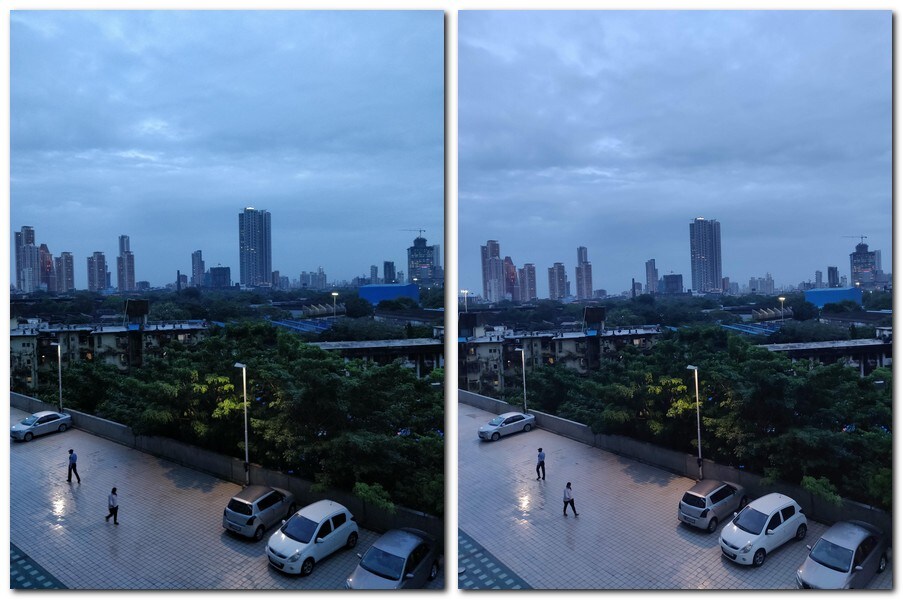
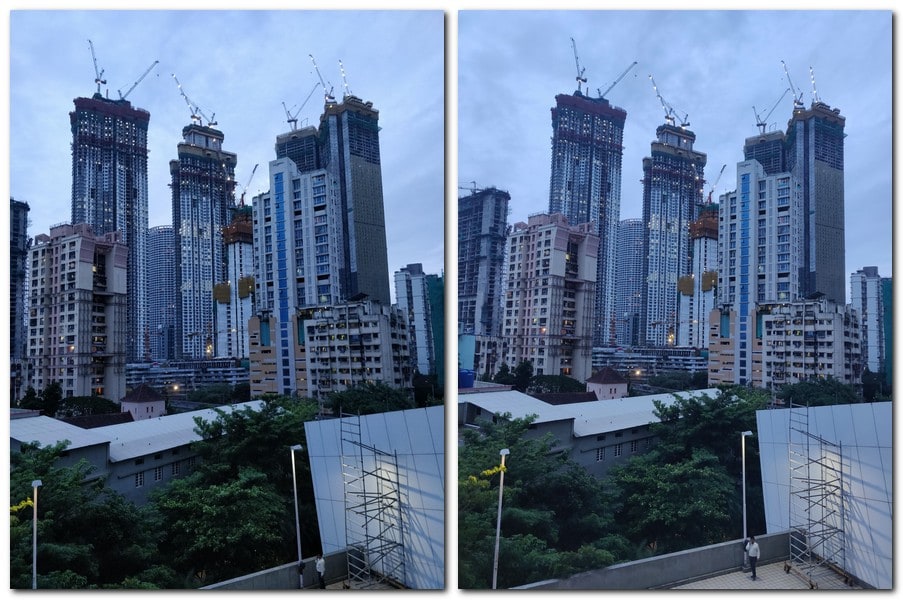
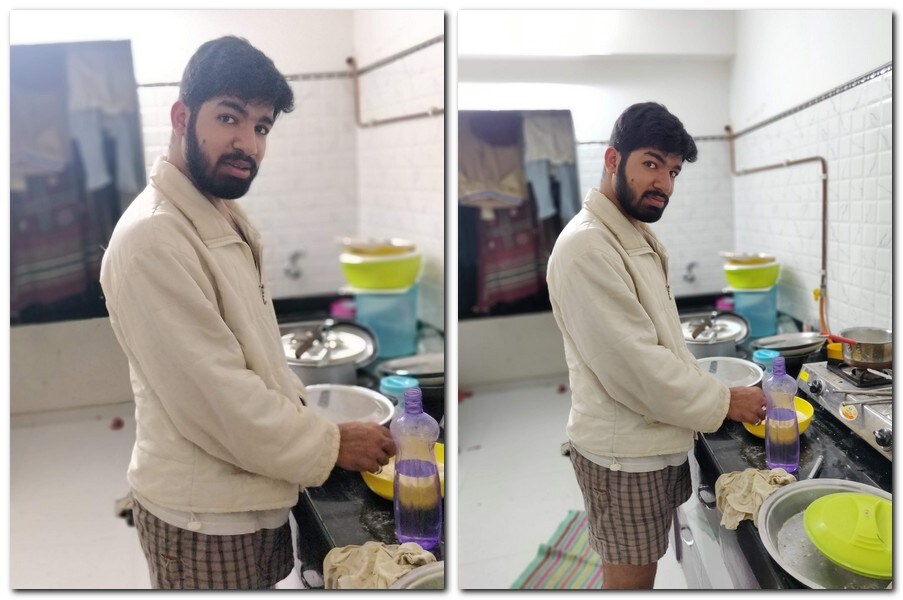
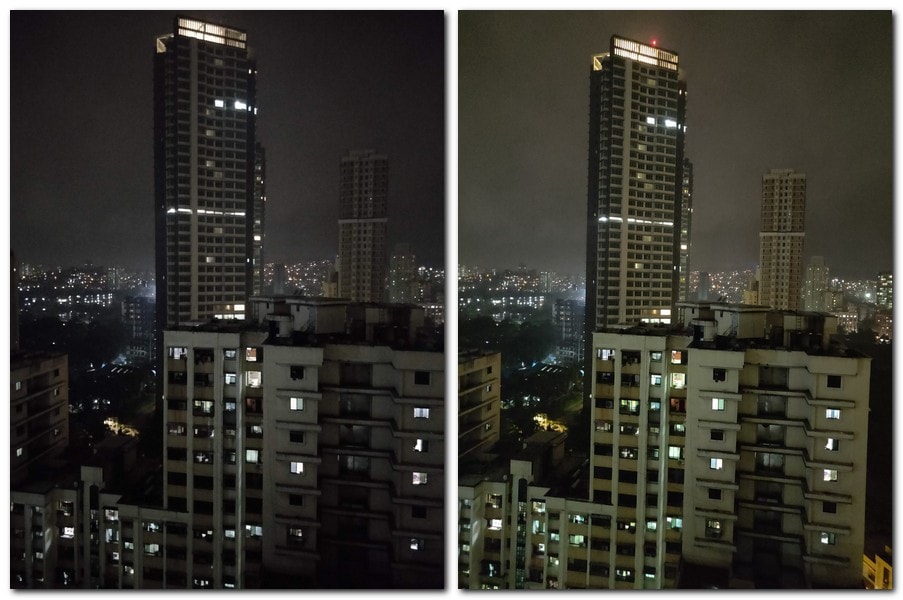
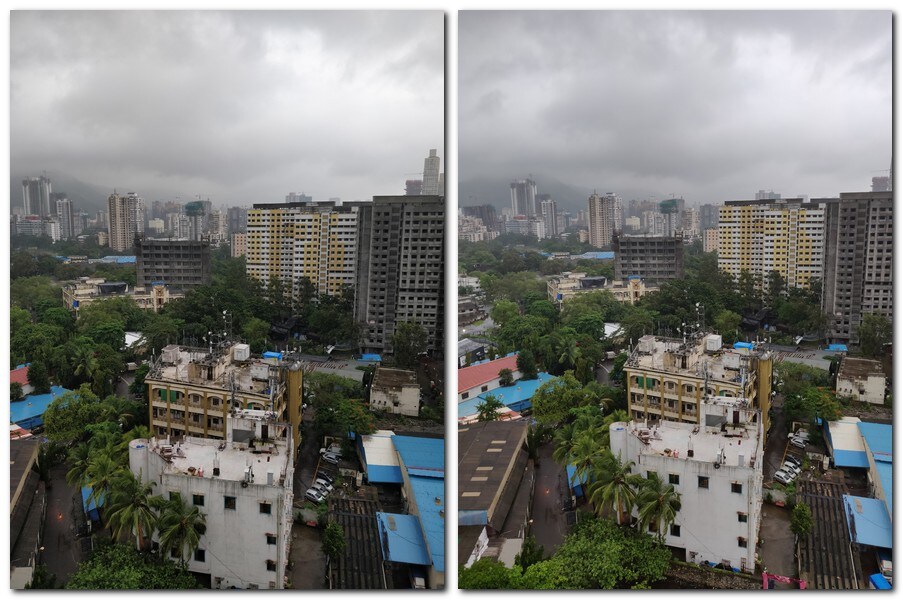
A blind photo test between the two devices should make it more clear. Below are a set of same images that have been taken from the OnePlus 5 and OnePlus 6. Let's see if you can spot which phone took which.
Hard to make a judgment? The left side images are OnePlus 5 and the right side is OnePlus 6. I'll leave it for you to decide which one is better. If you would like to see the high-res images of both these smartphones, you can check out the Flickr link below.
Design
The OnePlus 5 had a metal back. This gave the phone more resilience, sturdiness and made it less slippery. The OnePlus 6 with its glass back is not only less resilient (glass is fragile and metal is not) but the phone is quite slippery indeed. Matter of fact if I hadn't put a case on it, I'm quite sure that I would have cracked the glass on the back. Also, the OnePlus 6 is also significantly heavier than my OnePlus 5 which is slightly offputting for me.
Then there is the fingerprint reader. I know many people prefer it on the back and many prefer on the front. I'm in the latter category, but knowing how big tall screens are now a norm, quite clearly fingerprint reader won't stay on the front. But it doesn't matter on the OnePlus as its face recognition software is so good and accurate (even if it's not secure) because I hardly use the fingerprint reader anyway. But in cases that the face authentication software fails and the phone is lying on my workbench, I would prefer if the fingerprint scanner is on the front instead of behind.
Verdict
Don't get me wrong. I love the OnePlus 6. But then again I love nearly everything OnePlus does (not the OnePlus 2). As a user of the OnePlus 5, I feel that the device is a compact, sleek and a powerhouse of a device. It is efficient in performance and even after 10 months of usage and it still gives me at least a day's battery.
The OnePlus 6 also happens to be a truly amazing device. The bigger display, camera tweaks and a glass back make it an extremely enticing option for buyers. But does the phone offer such an immense upgrade that I part from the already amazing OnePlus 5? I don't think so.
Facebook has announced the end of plans to build drones that could give sustained and stable internet access to the developing world.
The ‘Aquila’ Internet Drone Project has been grounded, ending Facebook’s plans to build a network of high-altitude solar-powered drones in the skies that could have given sustained and stable internet access to the developing world.
Facebook broke the news in a blog post earlier this week, saying that while the company was still committed to the original goal of bringing more people online, it would instead rely on other companies to build aircraft, and stop building its own from the projects base in the United Kingdom.
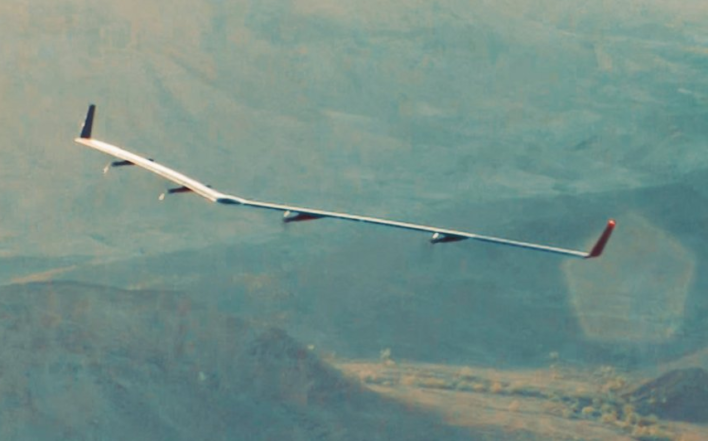
The now grounded Aquila drone in flight: The wingspan exceeds that of a Boeing 737…
Lofty Goals
Facebook had originally intended to construct an entire fleet of Aquila drones, and provide Internet access to some four billion people around the world who currently have no internet access, or limited connectivity. “No one has ever built an unmanned aeroplane that will fly for months at a time, so we need to tune every detail to get this right,” Zuckerberg said some years ago.
The prototype Aquila drones that were built weighed around 1,000 pounds (450 kilograms) and had a longer wingspan than a Boeing 737. It’s estimated top speed at altitude was expected to be around 80 miles per hour. The Aquila drones would also have run on autopilot with manned ground crews to manage certain manoeuvres.
Fallen to Earth with a bump
However, technological difficulties, and mechanical issues had delayed and set the project back. Those, coupled with rising competition from the aerospace industry finally ended Facebook’s dream of connecting people on a global level. “When we started the Aquila program back in 2014,” the Facebook blog reads, “very few companies were involved in this area…it’s been exciting to see leading companies in the aerospace industry start investing in this technology too — including the design and construction of new high-altitude aircraft…Given these developments, we’ve decided not to design or build our own aircraft any longer.”
Google, or rather Google’s parent company, Alphabet, quietly confirmed that it had closed its own internet drone project, ‘Titan’, in early 2016 – a mere two years after it competed fiercely with and outbid Facebook to buy the business.
A new warning has been issued for hotel guests using public Wi-Fi connections. Most people tend to the think of cyberattacks, data breaches, and hacking as the work of highly-skilled, dark web-style operatives. The reality, though, is not quite so skilled. Not only are sophisticated tools available for sale to low-level cybercriminals, but social engineering plays a large part in victimizing consumers. Tricking someone into thinking their network is locked up or handing over their personal identifiable information is a lot easier than actually stealing it yourself.
A new warning has been issued to summer holiday travelers, one that builds on a known threat. For years, consumers have been warned about the dangers of connecting over public wifi, as they cannot know who else is on the connection and can see what they’re up to. Now, wifi “masking” of known, trusted networks allows even the least skilled would-be hacker to steal information.
So what does this mean for hotel guests?
Consider the example of traveling to Hawaii. You book reservations at a four-star resort, “Kona Key,” for example. The Kona Key wifi connection appears in your device’s list when you reach the property. During your stay, you find other available connections, some of them stronger. Kona Key Poolside, or Kona Key Bar and Grill. Perhaps there’s a Koana Key connection, too. Those are the spoofed connections. By setting up wifi connections that are not associated with the property, scammers trick guests into connecting over the wrong wifi. This unsecured connection allows the scammer to see everything the guest is doing, including entering usernames and passwords, credit card information, and more.
Unfortunately, it happens far too often According to the Identity Theft Resource Center, there are 50 new cases of identity theft every minute, utilizing tactics like hacking, data breaches, POS skimming, and more. Year-over-year record-setting numbers of data breaches continue to reach epidemic proportions; in 2017, over 1,500 separate data breaches resulted in the compromise of more than 179,000,000 consumer records. There is no indication that these numbers will decrease in the near future, and if anything, new technology and new tactics such as this one may lead to even higher numbers than before.
News has emerged that Sony unintentionally uploaded a full 90 minute movie to YouTube, when all they were trying to do was upload a teaser trailer.
The mistake made by Sony’s US distributor stayed online for over 6 hours, before the error was spotted, and the movie removed, earlier this week.
YouTube users had clicked on the link expecting to only see the standard 2 minute trailer for the the low budget ‘Khali the Killer,’ but were instead treated to the whole film, credits and all.
“The entire movie? They uploaded the entire movie?” A promotional still from Khali the Killer
Unfortunately, ‘Khali’ was not available in HD, which despite disappointing, was probably the least of Sony’s worries.
The first clue many YouTubers were watching the full movie was the 90 minute duration ticker on the video sharing site, giving away the fact that the upload was more than just some enticing highlights. With that said, if you weren’t lucky enough to catch the movie for free on YouTube, or If you’ve never heard of ‘Khali the Killer,’ then that’s probably no surprise, and may even be something of a lucky escape.
The Good, The Bad, and The Ugly. Reviews of the film have slated it fairly unanimously, and the movie has a 3.6/10 rating on IMDB, based on 179 reviews, at the time of writing.
Khali the Killer, is a low budget movie about a Los Angeles-based hitman, and had for the most part slipped under the mainstream radar despite already having been released in parts of Europe and playing at numerous film festivals over the summer.
“After deciding to retire, an East L.A.,” the synopsis goes, Khali the “hit man decides to take one last job to help support his ailing grandmother’s end of life care. But everything falls apart, when he develops empathy for the targets of his hit, and he’s forced to make the toughest decision of his life.”
In 2014, Sony made a similar error when it posted the multi-million dollar budget film, The Amazing Spider-Man 2, to its South Korean YouTube account.
The link for the Khali movie now just leads to a blank video page.
The tech industry has had a discrimination problem for many years, one that Silicon Valley claims to be addressing…still.
People of color, women, and the LGBTQ community have reported not feeling very welcome in terms of hiring, promotions to management level positions, and credit for innovation. In fact, many have reported open hostility over the years, despite a better understanding of acceptance and equality from society as a whole.
Microsoft, no stranger to reports from employees about the conditions in the workplace, has launched a new initiative in an effort to bring more diversity to its talent pool: returnship. These “returns” (as opposed to “interns”) are women looking to return to the workforce after a period of time off, for whatever reason, and the tech industry is fostering this return to the workforce
On paper, it’s ideal. Women who’ve taken time off to care for their families not only understand what it means to put someone else’s needs ahead of their own, they’re often fiercely dedicated to seeing the humanity behind their work. Everything is driven by a purpose that puts people first rather than simply profit or achievement.
There’s still a long way to go… Unfortunately, the very nature of zooming in on older women is, in itself, somewhat discriminatory. Where are the initiatives for women who didn’t have the luxury of being married to spouses who are wealthy enough to afford them the chance to raise a family? Where are the initiatives for women who didn’t feel the need to reproduce in order to show their worth and ability to multi-task? More importantly, given the bias in favor of hiring younger males in tech, where are the programs aimed at hiring or retaining older men who’ve still got a lot to contribute?
Rather than self-congratulatory grandstanding about hiring middle-aged women who haven’t worked in a few years, companies would do well to break down the barriers that prevent people of any demographic from succeeding in their fields. To highlight how ineffective programs like this may be, the Microsoft returnship hires will be sent to work on two different programs in Vancouver. It’s an ideal job if there’s no one in your life unwilling to uproot and move.
A growing number of tech companies are pushing back against US Government use (or abuse) of their products. Microsoft was one of the first headlining companies to recently voice concerns over its products being used to enable a practice that many people find inhumane. Numerous employees came together to sign an open letter to the executives, requesting that their hard work on Microsoft tools not be used to mistreat asylum seekers and their children. At the time, company executives were slow to take a stance. Of course, those employees aren’t alone. Numerous companies have voiced–in one way or another, officially or otherwise–their discomfort with their products aiding and abetting what they see as human rights violations. Unfortunately, it’s one thing to send out a tweet about your supposed outrage, it’s something else entirely to be making millions of dollars off the government’s use of your product. According to areport by Gizmodo that also cites investigations by The Verge and NBC, many companies have multi-million dollar contracts with ICE, some reaching $75 million. Names like Hewlett-Packard, Thomson Reuters, Palantir, Motorola, and others are profiting nicely from activities that some of their leadership (and workers) denounce, at least in social media soundbites.
So, who’s actually taking action?
Only Hewlett-Packard seemed to take an official stance, even if there was no talk of a refund. “As a company, we are opposed to any policy that separates children from their families and urge the administration to change its policy to keep families together,” a representative stated as told to NBC. While Microsoft executives did speak out against the crisis of separating children from their parents at the border, there has been no word on how the company will go about revoking its contracts to use its software in border patrol agencies.
New reports have come out that Amazon employees are the latest tech workers to reject government abuse of their work. A very forceful letter to company founder Jeff Bezos from the employees closely mirrored the sentiments of top shareholders, voicing concerns that selling facial recognition software to the government would not sit well with consumers. The tool, ironically (or not) named AWS Rekognition-with-a-K, has already been deployed for picking criminals out of a crowd by law enforcement.
According to Metro, “The Amazon workers’ letter lists three demands: For Amazon to stop selling the technology to law enforcement, to stop providing technology to partners that enable ICE, and to practice stronger transparency.”